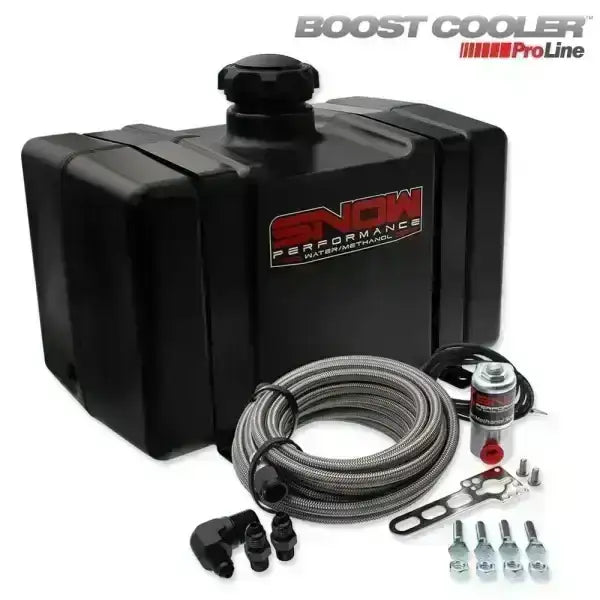
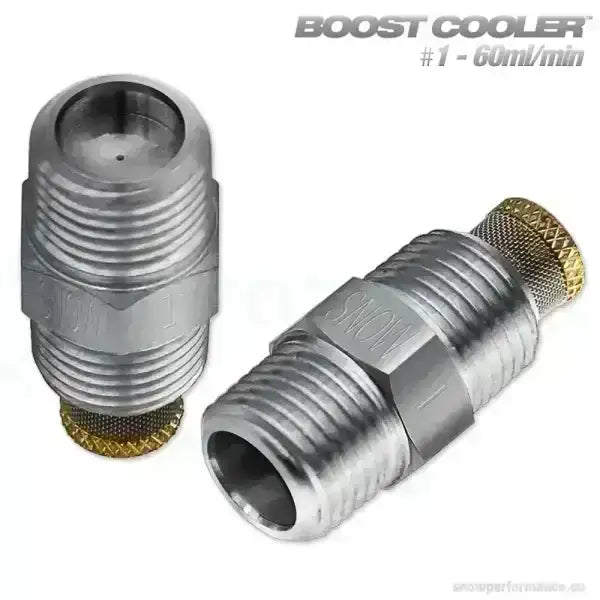
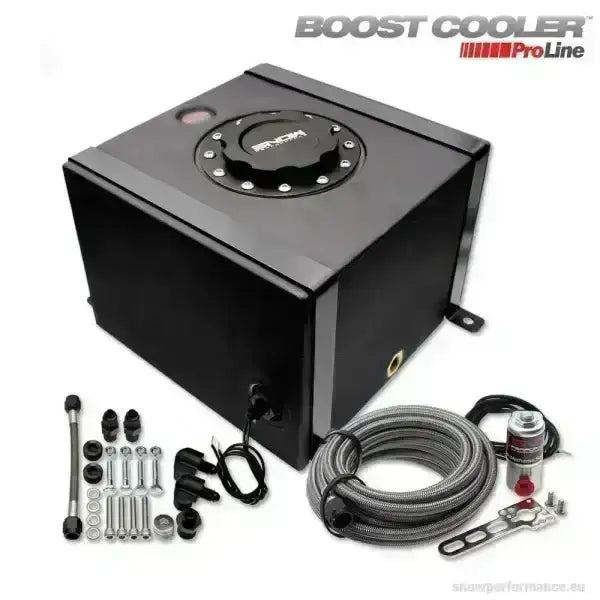
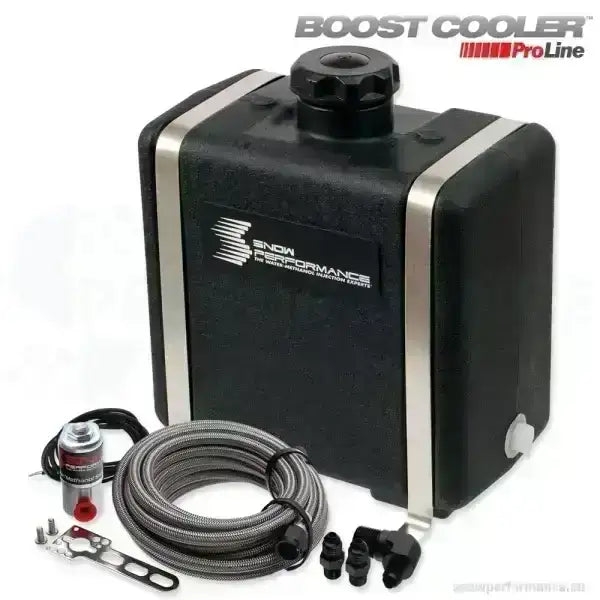
Water injection boost cooler
Stage 3 DI ProLine
Advanced water injection system for high-performance turbo and supercharged engines – maximum thermal stability for demanding performance setups.
Description
The Boost Cooler Stage 3 DI ProLine water injection system was developed for modern, high-performance engine designs where the thermal load on the intake air is a limiting factor. Through the precise injection of water or water-methanol mixtures, the intake air temperature is significantly reduced, knocking tendency is lowered, and stable power output is ensured even under high continuous load.
System function & operating principle
- Active reduction of the intake air temperature
- Increased knock resistance under load
- Stabilizing boost pressure at high power levels
- Improved thermal safety in high-performance engines
- Support for aggressive ignition and boost pressure maps
Stage 3 design (DI ProLine)
- Designed for direct injection (DI) engines
- High-performance pump for constant flow rate
- Precise, load-dependent injection control
- Suitable for high charging pressures and continuous loads
- Ideal for Stage 2 and Stage 3 performance setups
Advantages in performance applications
- More consistent power output at high temperatures
- Improved engine stability
- Reduced thermal stress on pistons, valves and turbochargers
- Ideal complement to performance-oriented software optimizations
- Increased power reserve under full load conditions
Area of application
Developed for high-performance turbo and supercharged engines in motorsport applications and for highly stressed performance vehicles. Particularly suitable for vehicles with increased boost pressure and performance-enhanced engine tuning.
Notes
Racing equipment – not approved for use on public roads.
Intended exclusively for motorsport and export vehicles. Not approved for public road use.
Installation, commissioning, and tuning must be carried out by a qualified specialist workshop . Adjusting the engine software is absolutely essential for safe and efficient operation.
© Kraftfahrzeug Technik Hannover (KTH)